
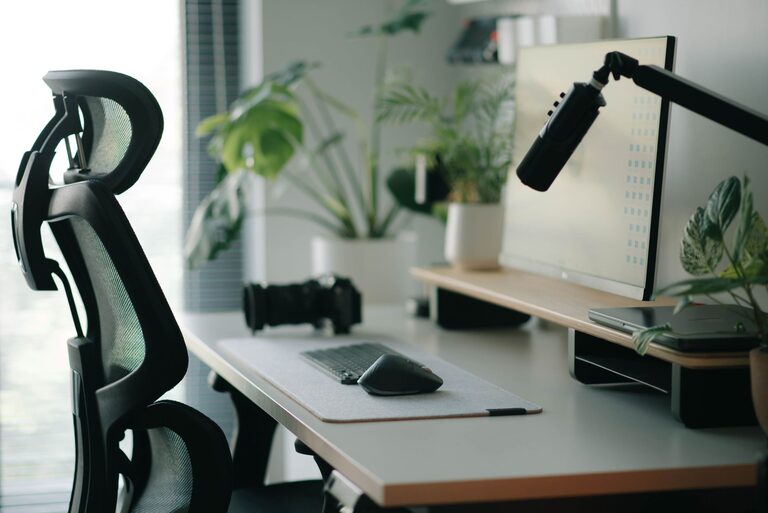
Creating an effective desk setup is essential for maintaining focus and comfort during your workday. Whether you work from home, in an office, or a mix of both, a well-organized and ergonomic workspace can help reduce fatigue, increase productivity, and enhance your overall well-being. In this post, we’ll explore practical tips to design a desk setup that supports concentration and keeps you comfortable throughout the day.
Why Your Desk Setup Matters
Your workspace influences how well you work. Poor setup can lead to discomfort, distractions, and reduced productivity. On the other hand, a thoughtfully arranged desk supports good posture, minimizes clutter, and creates an environment conducive to deep work.
Focusing on both ergonomics and organization ensures that your desk setup supports your physical health and mental clarity.
Choosing the Right Desk and Chair
Desk Height and Size
Ensure your desk is at a height where your arms can rest comfortably at a 90-degree angle when typing. Standard desk height ranges from 28 to 30 inches, but adjustable desks or sit-stand desks offer greater flexibility.
The desk should be spacious enough for essential items like your computer, keyboard, mouse, and any documents. Avoid overcrowding to prevent distractions.
Ergonomic Chair
Invest in a chair that supports your lower back, promotes good posture, and is adjustable in height. Look for chairs with lumbar support, adjustable armrests, and a comfortable seat cushion. Sitting properly reduces strain on your neck, back, and shoulders.
Optimize Your Monitor Placement
Your monitor position plays a crucial role in reducing eye strain and neck pain.
– Place the monitor directly in front of you, about an arm’s length away.
– The top of the screen should be at or just below eye level.
– Use a monitor stand or adjustable arm if needed to achieve the correct height.
– Consider dual monitors if your work involves multitasking, but arrange them so your neck doesn’t turn excessively.
Keyboard and Mouse Setup
Keep your keyboard and mouse close enough to avoid reaching. They should be positioned so your wrists are straight and your forearms parallel to the floor or slightly declined.
Using a wrist rest can help reduce strain, but it’s important not to rest your wrists while typing — instead, keep them hovering comfortably.
Lighting Matters
Good lighting reduces eye strain and helps maintain alertness.
– Position your desk near a window to take advantage of natural light.
– Avoid glare on your screen by adjusting blinds or positioning lighting sources appropriately.
– Use a desk lamp with adjustable brightness for focused tasks during evening hours.
– Choose soft, neutral light bulbs to create a comfortable atmosphere.
Declutter and Organize Your Desk
A tidy desk helps clear your mind and improve focus.
– Use organizers, trays, or drawers to store supplies.
– Keep only essential items on your desk.
– Regularly clean and declutter your workspace.
– Incorporate cable management solutions to keep cords neat and out of the way.
Add Personal Touches Mindfully
Personal items like photos, plants, or artwork can boost your mood and creativity, but keep them minimal to avoid distractions.
– Small plants improve air quality and add a calming element.
– Inspirational quotes or artwork can motivate without cluttering.
– Rotate personal items periodically to keep your space fresh and engaging.
Manage Noise and Distractions
A quiet environment helps maintain focus.
– Use noise-canceling headphones if your space is noisy.
– Try ambient noise apps or soft music if complete silence feels isolating.
– Communicate boundaries with family or coworkers during focused work sessions.
Take Breaks and Move
No desk setup can substitute for regular breaks and movement.
– Follow the 20-20-20 rule: every 20 minutes, look at something 20 feet away for 20 seconds.
– Stand up, stretch, or take a short walk every hour.
– Consider using a sit-stand desk to alternate your position throughout the day.
Final Thoughts
A comfortable and focused desk setup requires attention to ergonomics, organization, lighting, and your personal work style. Small changes like adjusting your monitor height, decluttering your space, or adding appropriate lighting can make a big difference in your productivity and well-being.
Experiment with these tips to create a workspace that encourages focus and keeps you comfortable, so you can do your best work every day.